Renting Out Your Holiday Home: What You Need to Know Before Hosting Guests
This blog is for marketing purposes only and does not constitute advice.
Maybe your holiday home sits empty for part of the year, and you've started wondering whether you could rent it out for a few weekends. Perhaps you're already getting the property ready for guests. Either way, there's one job worth adding to your list before the first booking arrives: check your Holiday Home Insurance.

A holiday home you use yourself isn't necessarily insured in the same way as one you rent to paying guests. Once the way you use the property changes, your insurer needs to know about it so that you can make sure you have appropriate cover in place.
Can I rent out my holiday home to guests?
An Post Insurance offers Holiday Home Insurance for properties used by you, your family or friends. If you also rent your holiday home to paying guests, you'll need to make sure your Holiday Home Insurance is arranged for that use. That distinction matters because an insurer assesses a property partly on the basis of how it is occupied and used. So before you put the listing live or accept your first booking, tell your insurer what you're planning.
Why does my insurer need to know that I'm renting out my holiday home?
Think about what changes when paying guests begin staying at a property. Instead of the holiday home being used only by you, your family or friends, different people may be staying there throughout the year. You may not know the guests personally, and the pattern of occupancy at the property can change. Those are relevant details for an insurer and that's why you shouldn't assume that a Holiday Home Insurance Policy arranged for private use automatically extends to short-term paying guests.
The safest approach is simple: tell your insurer exactly how the holiday home is being used and let them confirm the cover you need.
What happens if I don't tell my insurer?
This is where it's important to be careful rather than dramatic. Insurance is based on the information provided about you, the property and how it is used. If the way you use your holiday home changes, you should tell your insurer.
If relevant information isn't disclosed, it can affect how your policy operates and how a future claim is handled. Depending on the circumstances and policy terms, this could include a claim being reduced or declined, or the policy being cancelled, voided, or treated differently by the insurer.
That doesn't mean every undisclosed change will automatically produce the same outcome. The consequences depend on the circumstances, the information involved and the terms of the policy.
It's much better to have the conversation before you start hosting than to discover after something has happened that the insurer didn't know paying guests were staying at the property.
Is Holiday Home Insurance the same as Holiday Homes for Rent Cover?
No, the simplest way to understand the difference is to ask: Who stays at the property? If the holiday home is for you, your family or friends, Owner Occupied Holiday Home Insurance may be appropriate, but if you rent it to paying guests for short stays, you need insurance designed for that use.
Current An Post Insurance Holiday Home Insurance specifically distinguishes between these two situations.
When getting a quote for a holiday home, you'll be asked to confirm whether the property is for personal use only or for personal use and guest rental. Make sure to answer based on how you actually intend to use the property.
What if I only rent the holiday home occasionally?
Occasional renting is still worth discussing with your insurer. It's easy to think “It's only a couple of weekends” or “We're still using it ourselves most of the year”, but the relevant point is that paying guests will be staying at the property.
Don't try to decide for yourself how many bookings would make the change significant enough to mention. Instead, explain your plans to the insurer and let them tell you what cover is appropriate. That also gives you an opportunity to ask questions before accepting bookings rather than trying to interpret the policy yourself.
Does the booking platform insure my holiday home?
If you use a booking platform like Airbnb, Vrbo, or Booking.com that offers some form of protection to hosts, don't assume it replaces your own Holiday Home Insurance. Platform protections and insurance policies can have their own terms, exclusions and eligibility requirements. From the perspective of your Holiday Home Insurance, the important thing is still to tell your insurer how the property is being rented, including which platform it's booked through. Cover for short-term platform rentals varies between insurers, so it's essential to confirm with your insurer that your specific arrangement is covered before you start hosting.
Treat anything offered by a booking platform separately and read its terms so that you understand what it does and doesn't provide.
What should I insure in a holiday home I rent to guests?
Think about both the property itself and the things you leave in it. A holiday home being rented to guests might contain furniture, appliances, televisions, kitchen equipment and other belongings that you own and provide for guests to use.
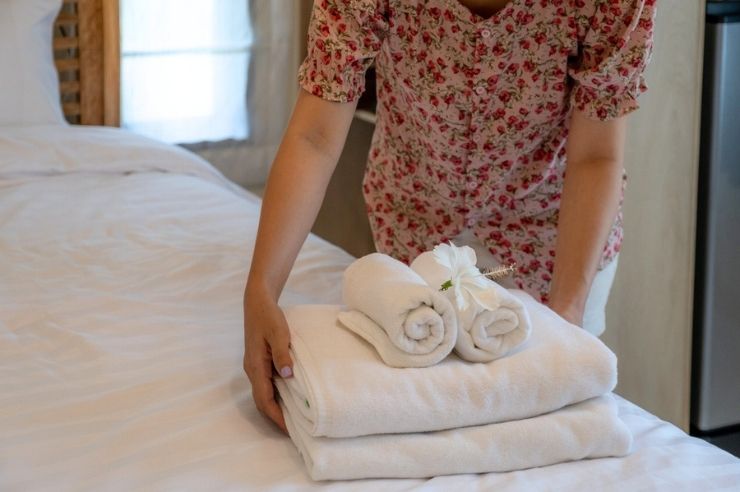
An Post Insurance's Holiday Homes for Rent Cover is designed to provide protection for the property, the contents you provide and your liability as the owner during short-term stays, subject to the applicable policy terms and conditions.
When arranging Buildings Cover, make sure the Buildings Sum Insured reflects the appropriate rebuild cost, rather than the property's market value.
For Contents Cover, consider what it would cost to replace the insured belongings you provide at the property.
And remember that cover limits, terms, conditions and exclusions can vary depending on the insurer, so check the policy documentation that applies to you.
What about liability when guests are staying?
Having paying guests at your holiday home also makes liability worth understanding. For example, circumstances could arise where you are legally liable for injury to another person or damage to their property.
An Post Insurance's current Holiday Home Insurance includes Public Liability Cover, subject to the insurer and policy terms and conditions.
If you're renting your holiday home to guests, check the liability protection provided by the particular Holiday Homes for Rent Policy you're considering rather than assuming all policies work in exactly the same way.
What happens when the holiday home is empty between bookings?
Holiday homes can spend significant periods unoccupied, whether they're rented to guests or reserved entirely for personal use. That's one of the reasons specialist Holiday Home Insurance exists.
Insurance policies can contain specific conditions relating to periods when a property is unoccupied, and the details vary between insurers and policies. Rather than relying on a particular number of days you've read online, check the terms that apply to your Holiday Home Insurance Policy.
If you expect the property to be unoccupied for a longer period than usual, contact your insurer and ask whether there is anything you need to do.
Is renting a holiday home the same as being a landlord?
Not necessarily from an insurance perspective. There's a difference between a property used as a holiday home and rented to guests for short stays and a residential property rented to tenants.
An Post Insurance provides Landlord's Insurance for residential rental properties, while a holiday home that is also rented to short-term guests can fall under its Holiday Homes for Rent offering.
If you're unsure which description fits your property, don't worry about trying to categorise it yourself. Explain how the property is actually used, including who stays there and whether they're short-term guests or residential tenants, and ask which insurance option is appropriate.
What if I start renting out a holiday home that's already insured?
If you already have Holiday Home Insurance and decide later that you'd like to start accepting paying guests, contact your insurer before you begin renting it out. Tell them:
- that you plan to rent the property to paying guests;
- whether you'll continue using it yourself;
- the type of letting you have in mind; and
- any other information they ask for about the property or how it will be occupied.
Your insurer can then explain whether your existing policy needs to change and what options are available. You don't need to work out the insurance solution yourself before making contact. What matters is being clear about what you're planning to do.
What questions should I ask before listing my holiday home?
If you're at the “could we rent this out?” stage, a quick insurance check now can save uncertainty later. Before accepting bookings, ask:
- Does my current Holiday Home Insurance allow paying guests?
- Do I need Holiday Homes for Rent Cover?
- Does the insurer know I'll use the property myself as well as rent it?
- Are my Buildings and Content Sums Insured figures appropriate?
- What liability cover is provided?
- Are there conditions I need to follow while guests are staying?
- Are there conditions that apply when the property is unoccupied?
- Are there exclusions or Optional Covers I need to understand?
- What should I do if the way I use the property changes again?
If you're not sure about an answer, ask the insurer rather than making an assumption.
What should I consider before welcoming my first guests?
Getting a holiday home ready for guests can involve everything from fresh bed linen and spare keys to photographs and listings. Insurance might not be the most exciting item on that list, but it's worth sorting out early. The key point is straightforward: if paying guests are going to stay at your holiday home, tell your insurer.
Make sure the cover you arrange reflects how the property is actually being used, understand any conditions that apply and check again if that use changes in the future.
You can find out more about Holiday Home Insurance and the options available if you rent your holiday home to guests through An Post Insurance.
When you're ready, you can get a Holiday Home Insurance quote.
One Direct (Ireland) Limited, trading as An Post Insurance is regulated by the Central Bank of Ireland. One Direct (Ireland) Limited is a wholly owned subsidiary of An Post.
All the information on this blog is published in good faith and for general information purpose only. While An Post Insurance makes every effort to ensure that the information appearing on this blog is accurate and complete, it does not make any warranties about the completeness, reliability or accuracy of this information, whether express or implied, including but not limited to implied warranties of merchantability, fitness for a particular purpose or non-infringement. Any action you take upon the information you find on this blog is strictly at your own risk. An Post Insurance will not be liable for any direct, indirect or consequential losses and/or damages in connection with the use of, or action taken in reliance on information contained in our blog.