How to Calculate Your Rebuild Cost for Home Insurance
This blog is for marketing purposes only and does not constitute advice.
Your home’s rebuild cost is the amount required to completely rebuild your property if it were destroyed. It is not the same as your home’s market value. Your rebuild cost should account for the building itself and any associated rebuild costs such as demolition, labour, materials, professional fees, site clearance, permanent fixtures and outbuildings. For many standard Irish homes, the SCSI House Rebuild Calculator is a useful place to start, but for non-standard properties, professional advice may be more appropriate. Getting this figure right is essential to making sure your Home Insurance gives you the cover you actually need.

What is a Home Insurance rebuild cost?
Your rebuild cost (sometimes called your reinstatement value) is the amount it would cost to rebuild your home from scratch following a total loss, and that makes it very different from the price you paid for your property or the amount you might get if you sold it. A home’s market value can be influenced by factors like location or demand for property in the area, whereas your rebuild cost is concerned with what it would cost to reconstruct the property.
That's why it's so important to understand the difference when arranging Home Insurance. Using market value instead of rebuild cost is one of the most common causes of under-insurance.
How do I calculate the cost of rebuilding my home?
For many homeowners, a useful starting point is the SCSI House Rebuild Calculator from the Society of Chartered Surveyors Ireland (SCSI). The SCSI calculator uses its current rebuilding-cost guidance and provides average rebuilding rates for standard, estate-type homes. The rates vary by region.
Before using it, it helps to have some basic information about your property ready.
1. Know your house type and location: Select the house type that most closely matches your property and the appropriate region. This matters because the SCSI rebuilding rates vary depending on the type of property and the region in which it is located.
2. Work out your total floor area: You’ll need the total floor area of your home to use the calculator. Take care not to rely automatically on an old figure if your property has changed since you bought it. An extension, attic conversion or other substantial alteration may have changed the size and cost of rebuilding your home.
3. Include your garage and other outbuildings: Your rebuild cost may need to account for more than the main house. For example, if you have a garage, studio, home office or another outbuilding, make sure it is considered when establishing the appropriate amount to insure.
4. Think about your kitchen, fittings and finishes: A standard calculator is based on assumptions about a typical property. The SCSI calculator allows for adjustments where, for example, kitchen fittings and finishes are higher than average. The aim isn’t to estimate what those features add to your home’s sale price. It is to consider what they would cost to reinstate as part of rebuilding your home.

5. Know when an online calculator may not be enough: The SCSI calculator is designed to help homeowners estimate rebuilding costs, but it isn’t suitable for every property. SCSI states that its published rebuilding rates are intended for speculatively built or estate-type homes. It says they should not be used for other house styles such as one-off countryside homes or period properties, where homeowners should consider getting professional advice. If your property falls outside the standard types covered by the calculator, you can consider consulting a chartered surveyor for a professional assessment.
What does the rebuild cost include?
Your rebuild cost is about putting the property back together, rather than simply paying for bricks and mortar. Depending on your property, relevant rebuilding costs can include:
● demolition and site clearance;
● building materials and labour;
● professional fees;
● permanent fixtures and fittings, including fitted kitchens, bathrooms and wardrobes;
● and garages and other domestic outbuildings.
What if my home isn’t a typical estate-type property?
This is where it is particularly important to recognise the limits of an online calculator. If you own a period property, a one-off house in the countryside or another non-standard home, the SCSI’s standard rebuilding rates may not be appropriate for you.
The same principle is worth considering if your property has features that would make it unusually complex to reproduce. Rather than trying to make a non-standard property fit the closest calculator category, consider getting professional advice to establish an appropriate rebuild cost for your home.
What about a dormer bungalow or a home with an extension?
If your home has been extended or substantially altered, make sure your rebuild figure reflects the property as it stands today rather than how it looked when you first insured it.
If alterations mean your property no longer fits comfortably within the standard property types covered by the SCSI calculator, consider seeking professional advice from a trusted chartered building surveyor.
How does rebuild cost work for an apartment?
If you own a house, you'll normally need to work out your own rebuild cost using the SCSI calculator or a chartered surveyor. Apartments work differently: the SCSI calculator doesn't cover apartments at all, and apartment and flat owners typically take out Contents-only Cover, since the building itself is usually insured separately by the management company. If you own an apartment, check with your management company how the building is insured rather than trying to calculate an individual rebuild figure yourself.
If I’ve renovated or extended my home, do I need to recalculate?
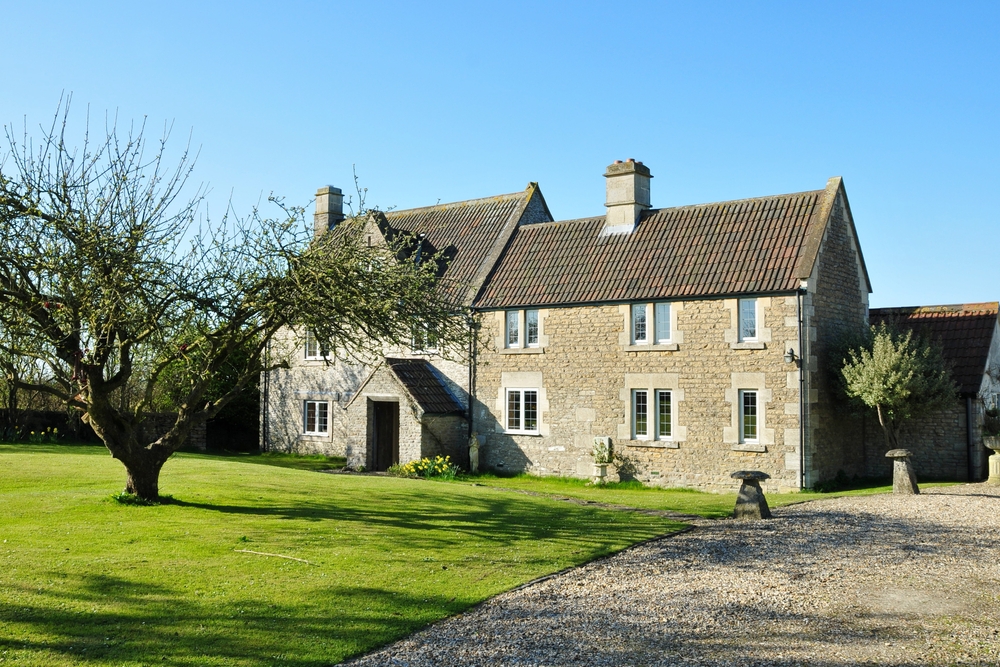
It’s important to review your rebuild cost after significant work to your home. An extension may increase the floor area that would have to be rebuilt, while home renovations can change the cost of replacing permanent fixtures and finishes. It’s important to review your Buildings Cover value figure periodically, particularly after renovations or extensions.
Even if you haven’t made significant changes, rebuilding costs can change over time. That means a figure calculated several years ago shouldn’t simply be assumed to remain appropriate indefinitely.
Reviewing your rebuild cost regularly, especially after significant changes to your property, can help you keep your Building's sum insured aligned with your home.
Why does getting the rebuild cost right matter?
If the sum you insure your home for is lower than its actual rebuild cost, you could be under-insured.
Where an average clause applies, this can mean a claim payment is reduced proportionally to reflect the level of under-insurance. You can read more about how this works in our underinsurance guide.
Getting your rebuild cost right isn’t about finding the lowest possible figure in an attempt to reduce your premium. It’s about making sure the amount you insure your home for accurately reflects what it could cost to rebuild so you’re correctly covered in case something happens.
Is there a free calculator for estimating the cost of rebuilding a home in Ireland?
Yes, the Society of Chartered Surveyors Ireland provides a free SCSI House Rebuild Calculator based on its current rebuilding-cost guidance.
Remember that the SCSI rebuilding rates are intended for standard estate-type homes. If your property is older, non-standard or otherwise difficult to match to the calculator, consider seeking a professional assessment instead.
Once you have your rebuild figure, you’ll have one of the key pieces of information you need when arranging Buildings & Contents Insurance.
Buying your first property?
Our First-Time Buyers Home Insurance page explains some of the other insurance considerations to think about. If you’re weighing up your options, you can also Compare Home Insurance, and once you have your rebuild cost figure to hand, you can Get a Home Insurance Quote.
One Direct (Ireland) Limited, trading as An Post Insurance is regulated by the Central Bank of Ireland. One Direct (Ireland) Limited is a wholly owned subsidiary of An Post.
All the information on this blog is published in good faith and for general information purposes only. While An Post Insurance makes every effort to ensure that the information appearing on this blog is accurate and complete, it does not make any warranties about the completeness, reliability or accuracy of this information, whether express or implied, including but not limited to implied warranties of merchantability, fitness for a particular purpose or non-infringement. Any action you take upon the information you find on this blog is strictly at your own risk. An Post Insurance will not be liable for any direct, indirect or consequential losses and/or damages in connection with the use of, or action taken in reliance on information contained in our blog.
Through this website you are able to link to other websites which are not under the control of An Post Insurance. We have no control over the nature, content and availability of those sites and if you click on links to these websites you will be subject to the terms and conditions of those sites. The inclusion of any links does not necessarily imply a recommendation or endorse the views expressed within them.